Condition guide
Yeast Infections in Dogs
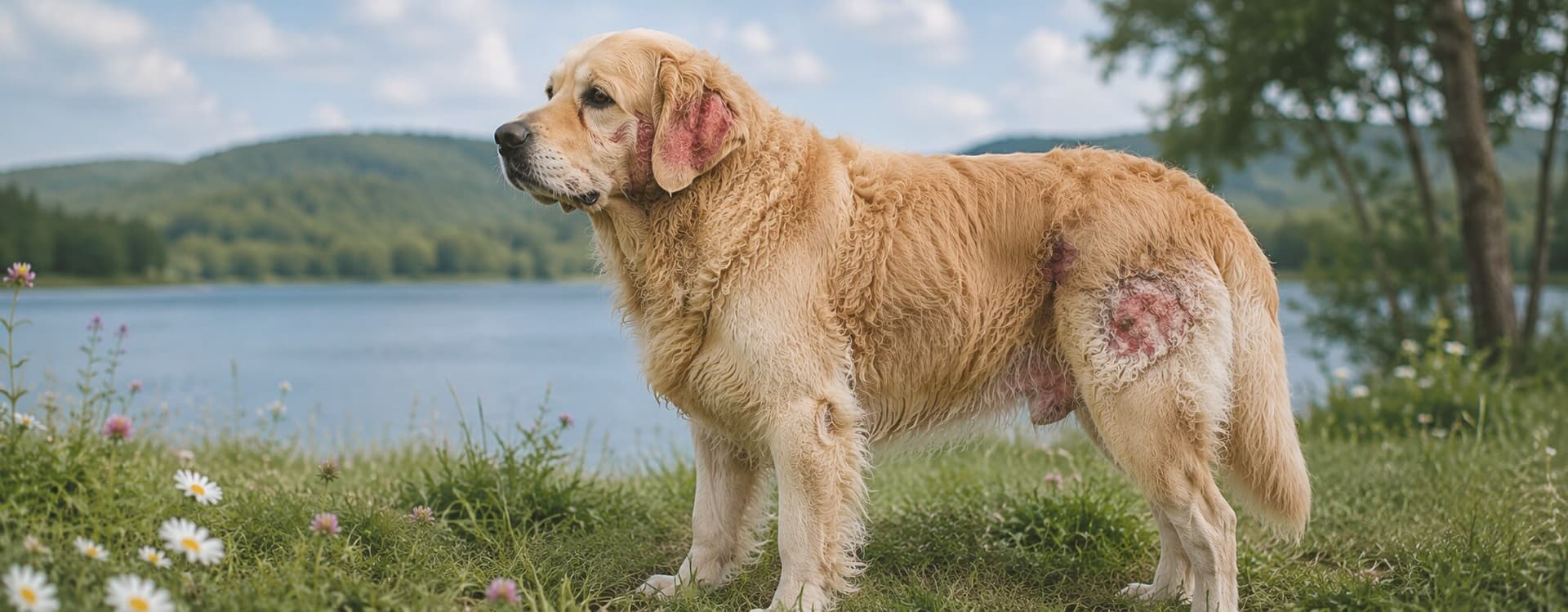
Yeast overgrowth (Malassezia dermatitis) is one of the most common skin conditions in dogs — and one of the most often mistaken for an allergy. Here's how to tell the difference, and what actually clears it.
The tells
How to recognise yeast
Any one of these is a strong hint. Two or more together makes yeast the leading suspect over an allergy.
- Paw licking or chewing, with rusty-red staining between the toes
- Ear scratching or head shaking — yeast loves warm, dark ear canals
- A foul, funky smell in the coat — often described as 'yeasty' or 'corn-chippy'
- Greasy or oily coat, sometimes with heavy dandruff (seborrhea)
- Small black or brown specks on the belly, around the genitals or teats
- Cyclic hair loss on the upper back or tail base
- Blackening skin, especially where hair has been lost
- Recurrent hot spots or 'allergy flares' that don't fully clear
Where it comes from
Why yeast overgrows in the first place
Yeast is a normal skin resident. What matters is why it stopped being kept in balance — the answer usually points at the immune system.
A depressed immune system
Yeast lives on every dog. The immune system keeps it in check. Illness, chronic stress, or a course of medication that suppresses immune response gives yeast the runway it needs to bloom.
Antibiotics or steroids
Broad-spectrum antibiotics kill the bacteria that normally compete with yeast for space. Steroids suppress the local immune response. Both are known to trigger yeast overgrowth as a side effect — an outcome the prescribing vet often doesn't warn owners about.
Shaving or surgery
A closely-run clipper blade can inject surface yeast under the skin. It's one of the more surprising causes of persistent post-surgical hair loss and blackening skin — the wound heals, but the yeast that was pushed under the skin doesn't leave with it.
A cut, a bug bite, a chronic scratch site
Anywhere the skin's barrier is broken is a doorway. Yeast doesn't need much of an opening to move from surface to depth, and once it's underneath, it thrives in the hair follicles.
The routine
What actually clears it
Botanical antifungal care applied daily, without steroids or antibiotics. The routine below is what runs behind every yeast-recovery story on this site.
1 · Get an accurate read
Yeast is often misdiagnosed as an allergy — the two present very similarly. A yeast infection responds fast to a topical antifungal. An allergy doesn't. If the routine below produces visible improvement inside two to three weeks, yeast was the driver.
2 · Cleanse without stripping
Bath with the Dermagic pH-balanced shampoo. Rinse thoroughly. Avoid human shampoos and anything with sulfates — they strip the coat's natural oils and make yeast conditions worse.
3 · Target the yeast at the skin
Massage Skin Rescue Lotion into affected areas daily. For stubborn patches, follow with Hot Spot Salve, which has more lanolin and clings to bare skin. Both use botanical antifungals — sulfur, neem, tea tree — chosen to kill yeast without suppressing immune function.
4 · Restore
As skin returns to health, switch to Cell Restoration Crème to rebuild the skin barrier and support new hair growth. Most recovery arcs take 4–12 weeks, with visible improvement in the first fortnight if yeast was the driver.
When to see the vet
Deep or bleeding skin, ear infections that don't respond within a week of topical care, or a dog that's lethargic and off its food alongside the skin symptoms — those are vet visits. Yeast that's gone truly systemic needs support beyond a topical routine.
This page is educational. It isn't a diagnosis and it doesn't replace veterinary care.
The routine that clears it
Skin Rescue Lotion and Hot Spot Salve are the core of every yeast-recovery routine — botanical antifungals that kill the organism without suppressing your dog's immune response.